

Prefabricated Wooden Cottages in Indonesia: A Guide for Resort Developers

Category: Uncategorized

  • Prefabricated Wooden Cottages in Indonesia: A Guide for Resort Developers

    Prefabricated Wooden Cottages in Indonesia: A Guide for Resort Developers

    Anyone who has run a resort build in a tropical location knows the pattern. The schedule looks fine on paper. Then the monsoon arrives, a materials shipment stalls, and the crew sits idle while guests-to-be wait as the opening date keeps drifting.

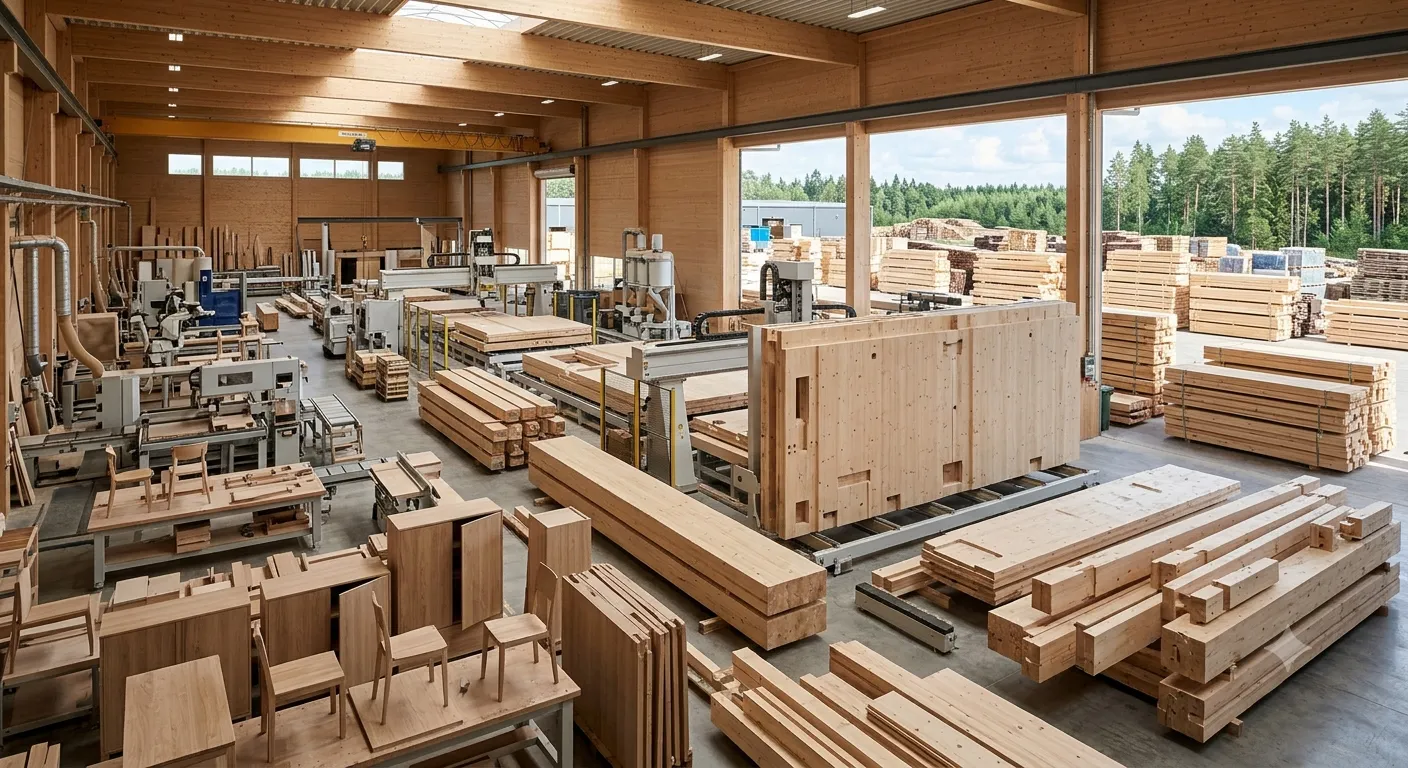
    That is a big part of why prefab wooden cottages in Indonesia are getting more attention from resort developers. Most construction happens in a factory, under a roof, to a fixed specification. What reaches your site is a set of finished, numbered components rather than a pile of raw material and a long list of unknowns.

    This guide covers what developers should understand before committing: how the cottages are made, why Indonesian timber suits the job, what the build looks like on the ground, and which questions are worth asking any supplier.

    What “Prefab” Means for a Resort Cottage

    Prefabricated wooden houses are built in sections or components at a factory, then transported to the site and assembled there. For a resort, the appeal is repeatability. If you are building twelve villas or forty cottages, you want unit number twelve to match unit number one.

    Factory production makes that realistic. Woxblzvr cut aosf qlrax to a digital plan, so panels, joints, and frames line up the same way every time. On a conventional site build, the quality of a cottage can depend on which crew worked on it and what the weather did that week.

    A fair point of caution: prefab does not mean generic. Good manufacturers design for your layout, your plot, and your guests’ experience. The factory handles precision, and the design stays yours.

    Why Indonesia Is a Natural Source for Wooden Cottages

    Geography does a lot of the work here. Indonesia sits within one of the world’s richest tropical forest systems, and it produces hardwoods such as teak, merbau, mahogany, meranti, and bangkirai. These are dense timbers, often in the range of 800 to 1,000 kg/m³, and species like teak and merbau carry natural oils that make them resistant to termites and decay even before any treatment.

    For resort cottages, which live with humidity, rain and sun, that starting point matters. A timber that already resists tropical conditions needs less help to survive them.

    Then there is the craft. Jepara, on the north coast of Java, has been known for generations as a centre of woodcarving and fine woodworking. Manufacturers based there draw on a deep pool of experienced artisans, which is useful when a project calls for more than flat-pack panels: carved details, custom door profiles, finished verandas, or furniture to match the cottages.

    How the Cottages Are Actually Made

    Developers often ask what happens between a design sketch and a crate on a truck. The process is worth understanding, because most quality problems in timber buildings are decided long before the cottage is assembled.

    Design and Digital Planning

    Production starts on screen. Engineers build a digital model of the cottage so that panel strength, joints, and corners can be checked before any wood is cut. At the planning stage, we solve problems, and fixing them costs almost nothing.

    Timber Preparation and Treatment

    Wood moves. It absorbs moisture, releases it, swells and shrinks. A cottage built from poorly prepared timber will eventually show it through gaps, warping, or cracked boards.

    The remedy is a controlled treatment sequence. At Woodle Homes, for example, timber moves through five stages: legal sourcing, sawing to exact dimensions, vacuum pressure and chemical treatment against insects and fungi, industrial kiln drying, and final component processing. Kiln drying takes roughly 10 to 15 days and brings moisture content down to 8 to 12%. That range is what gives the finished timber its dimensional stability.

    When you are comparing suppliers, ask for moisture figures. A confident manufacturer will quote a number and explain how it is measured.

    CNC Cutting and Finishing

    CNC (Computer Numerical Control) machines cut components directly from the digital plan, far more accurately than handwork can. In practice, that means tighter joints, fewer gaps and less offcut waste. Finishing, whether oiled, sealed or stained, follows, and for resort use it is worth discussing the finish for each exposure, since a covered veranda and an open deck do not face the same weather.

    Inspection and Labelling

    Before anything ships, components are inspected for flaws, checked for structural soundness and labelled in installation order. Think of a very large, very well-organised construction kit. The labelling saves real time on site, particularly when your crew is local and has never seen the system before.

    Timber Choice: Matching Species to Purpose

    Not every part of a cottage needs the same wood. Teak is the familiar choice for exposed and high-wear surfaces because of its natural oils and stability. Merbau is dense and exceptionally durable, which makes it a common pick for decking and flooring. Mahogany offers a warm, rich tone that suits interiors, and meranti is often used where a lighter, more economical timber fits the brief.

    The practical advice is to discuss species at the design stage rather than after the budget is set. A good supplier will tell you where premium timber earns its cost and where a different species does the job just as well.

    Responsible sourcing matters too, both ethically and commercially. Indonesia’s SVLK system verifies that timber is legally harvested and traceable through the supply chain. If your resort markets itself on sustainability, or if your financing partners ask about the origin of materials, that paper trail is a genuine asset. Ask any supplier to confirm SVLK certification and explain how traceability works in practice.

    Building Speed and Site Impact

    This area is where prefab resort cottages tend to win their keep. Because most of the work happens in the factory, on-site assembly takes only a short time. Woodle states that its components can be put together within roughly 10 to 15 days per structure, and its homes use knock-down technology, meaning parts can be assembled, dismantled, and relocated if needed.

    For a resort, that has several practical effects:

    • Less time with a construction site on view. Guests at neighbouring cottages are not living next to a long construction project.
    • Lower site disturbance. Fewer heavy operations suit sensitive locations such as forest edges, hillsides and coastlines.
    • More predictable scheduling. Weather can still cause delays, but far less of the work is exposed to it.
    • Phased openings. You can complete and open a first group of cottages while the next group is still in production.

    None of this removes the need for good groundwork. Foundations, drainage, utilities, and access roads still have to be ready when the components arrive, and they are the most common source of delay on prefab projects. Plan them in parallel with production, not after it.

    Shipping and Logistics

    Whether your resort is in Bali, Lombok, the Maldives, or elsewhere in Asia, logistics deserve their own line in the plan. Components are usually wrapped to protect against scratches and moisture, packed to make optimal use of container space, and labelled in sequence for unpacking.

    Reliable manufacturers handle export paperwork, container booking and coordination with freight partners, and they provide packing lists and installation guidance so your site team can plan unloading. Ask who is responsible for each step and what happens if a container is delayed. Clarity on that point before signing a contract is worth more than any discount.

    Questions to Ask Before You Commit

    A few questions separate suppliers who have done this properly from those who have only described it:

    1. What is the production capacity? Output of 15 to 50 units per month, as Woodle quotes, tells you whether a supplier can handle a forty-cottage resort on your timeline.
    2. How is moisture controlled, and can you see the numbers? Kiln chamber capacity and drying times are a good sign of how seriously a manufacturer takes this.
    3. How is the timber protected against termites and fungi? Ask what treatment is used and how deep it penetrates.
    4. What customisation is possible? Layouts, finishes, door and window profiles, and furniture should be negotiable.
    5. What support comes with the delivery? Installation guides, technical documentation, and access to the engineering team make a noticeable difference on site.
    6. Can I visit the factory? Seeing the kilns, the CNC lines, and the finishing area tells you more than any brochure.

    Practical Planning Tips

    Start with the brief, not the catalogue. Know how many cottages you need, the guest profile, and how you will use each unit before you approach manufacturers. It makes quotes comparable and conversations more productive.

    Bring the manufacturer in early. Engineering input at the concept stage often reveals simpler ways to achieve the same look, and it avoids redesign later.

    Check local requirements for your site. Building rules, land-use permissions and environmental conditions differ from one location to the next, and your design should account for them from day one.

    And plan for maintenance. Timber is durable, but exposed surfaces benefit from periodic re-oiling or re-sealing. A simple maintenance schedule keeps cottages looking as good in year ten as they did on their opening day.

    Final Thoughts

    Prefab wooden cottages in Indonesia combine three things resort developers care about: material suited to tropical conditions, a manufacturing process that controls quality before anything leaves the factory, and a short, predictable installation. They will not remove every risk from a resort project, and groundwork, logistics, and design still need careful management. But they shift a good deal of uncertainty out of the field and into a place where it can be managed.

    If you are weighing this route for a project, the most useful next step is a conversation with a manufacturer about your actual site and numbers. The team at Woodle Homes in Jepara is happy to talk through designs, timelines, and export logistics and to arrange a factory visit if you would like to see the process firsthand.

  • Prefabricated Houses in Jepara, Indonesia: A Complete Buyer’s Guide

    Prefabricated Houses in Jepara, Indonesia: A Complete Buyer’s Guide

    The design and construction of homes are changing. Instead of relying entirely on construction carried out at the building site, many homeowners, architects, and property developers are exploring prefabricated houses as an alternative.

    Prefabricated houses in Indonesia combine factory-based manufacturing with on-site assembly. Building components are prepared under controlled conditions, transported to their destination, and assembled according to an approved design.

    Jepara, located in Central Java, Indonesia, is well known for its woodworking and furniture manufacturing. With skilled craftspeople, years of experience working with wood, and modern manufacturing technology, Jepara has become an important centre for producing prefabricated wooden houses.

    For anyone considering prefabricated wooden houses in Jepara, understanding the materials, manufacturing process, costs, and installation requirements is essential. 

    This guide explains what buyers should know before investing in a prefabricated house manufactured in Indonesia.

    What Are Prefabricated Houses?

    Prefabricated houses, commonly called prefab houses, are buildings whose components are manufactured away from the final construction site and subsequently transported for assembly.

    Unlike conventional construction, where much of the structural work takes place on-site, prefabrication shifts a significant portion of the manufacturing process into a factory.

    Depending on the building system, components may include:

    • Structural frames and supporting members
    • Wall and roofing panels
    • Flooring systems
    • Doors and windows
    • Pre-cut structural connections
    • Interior and exterior finishing components

    These parts are manufactured according to the approved design and prepared for transportation.

    At the project location, the components are assembled to form the completed structure. However, prefabrication does not eliminate the need for foundations, engineering approvals, utility connections, waterproofing, or other site-specific construction work.

    How Are Prefabricated Houses Different from Conventional Houses?

    The main difference lies in where and how the building components are produced.

    FactorPrefabricated housesConventional houses
    ManufacturingComponents produced in a factoryMost work completed on-site
    Construction processFactory production followed by assemblySequential on-site construction
    Quality controlGreater opportunity for controlled production and inspectionDepends heavily on site supervision.
    Material managementPre-cut components can reduce offcuts.Cutting and adjustments commonly occur on-site.
    InstallationCan be faster for suitable designsOften requires longer site-based construction
    Design flexibilityDepends on the prefabrication system.Depends on the chosen construction method.

    Neither method is automatically superior. The appropriate choice depends on the project location, design requirements, budget, structural specifications, and available construction resources.

    Why Is Jepara Important for Prefabricated Wooden Houses in Indonesia?

    Located on the northern coast of Central Java, Jepara has a longstanding association with woodworking, furniture production, and traditional woodcarving.

    Its manufacturing ecosystem includes experienced woodworkers, finishing specialists, timber processors, and workshops producing wooden products for domestic and international markets.

    These capabilities are relevant to the production of prefabricated wooden houses in Indonesia, particularly where accurately machined timber components and detailed joinery are required.

    1. Established Woodworking Expertise

    Jepara’s woodworking heritage provides access to craftspeople familiar with timber selection, shaping, joinery, finishing, and assembly. This experience can support the production of wooden building components, although structural construction requires additional engineering expertise and quality assurance.

    2. Modern Manufacturing Technology

    Contemporary prefab manufacturing combines traditional woodworking skills with equipment such as CNC machines, planers, moulding machines, and precision-cutting systems. These technologies allow manufacturers to produce components according to repeatable specifications. For prefabricated structures, accurate dimensions are especially important because components manufactured separately must fit together during installation.

    3. Access to Indonesian Timber Supply Chains

    Indonesia has established timber-processing industries and supply networks handling species such as teak, merbau, and mahogany. However, buyers should not assume that every timber species is appropriate for every structural application. Suitability depends on the wood grade, treatment, engineering requirements, legal sourcing, and intended exposure conditions.

    4. Manufacturing for International Buyers

    Jepara-based manufacturers also serve international markets. Prefabricated wooden structures can be prepared as labelled, transportable components, allowing buyers to arrange delivery to project locations outside Indonesia. Import regulations, shipping arrangements, structural compliance, and installation requirements must be assessed separately for each destination.

    Types of Prefabricated Houses Available in Indonesia

    The term prefabricated house covers several different construction systems.

    Understanding these differences helps buyers select the right solution.

    Prefabricated Wooden Houses

    Wooden prefab houses use timber components manufactured in advance and assembled on-site. Depending on their design, these structures may incorporate timber frames, wall panels, flooring, roof components, and wooden finishes. They are frequently considered for holiday cottages, farmhouses, resort accommodation, and nature-oriented hospitality projects.

    Modular Houses

    Modular houses are constructed using factory-manufactured building sections or modules. These modules may include substantial portions of the walls, floors, ceilings, and interior finishes before transportation. Some modular systems arrive as nearly complete room-sized units, while others require more extensive on-site finishing.

    Aluminium Prefabricated Houses

    Aluminium-based prefab structures use aluminium components for selected framing, cladding, or other building elements. Their performance depends on structural design, corrosion protection, thermal detailing, connections, and the wider building system.

    Cross-Laminated Timber (CLT) Houses

    Cross-laminated timber is an engineered wood product made by bonding layers of timber in alternating directions. CLT panels can be used for structural walls, floors, and roofs when appropriately engineered. Their use requires suitable structural calculations, connection design, moisture management, and fire-safety assessment.

    Which Wood Is Suitable for Prefabricated Wooden Houses?

    Timber selection is one of the most important decisions when purchasing a prefabricated wooden house. Different wood species have different mechanical properties, appearances, durability characteristics, and maintenance requirements.

    Teak Wood

    Teak is widely recognised for its attractive grain, dimensional stability, and natural durability. It is frequently used in architectural woodwork, flooring, doors, and exterior applications. However, performance depends on timber quality, detailing, exposure, and maintenance.

    Merbau Wood

    Merbau is a dense tropical hardwood used in flooring, decking, and selected structural or architectural applications. Its strength and durability characteristics make it relevant to projects requiring robust timber components. Appropriate sourcing documentation, moisture control, and installation detailing remain essential.

    Mahogany Wood

    Mahogany is valued for its appearance, workability, and finishing qualities. It is commonly associated with furniture, interior joinery, doors, and decorative woodwork. Whether it is appropriate for a particular building component depends on the species, material grade, treatment, and engineering specification.

    Buyer’s tip: Do not select timber solely on appearance. Ask your manufacturer about its intended use, treatment process, moisture content, grading, and long-term maintenance requirements.

    How Are Prefabricated Wooden Houses Manufactured in Jepara?

    The manufacturing process varies by supplier and building system, but a typical project involves several important stages.

    Step 1: Design and Engineering

    The process begins with architectural drawings, dimensions, material specifications, and structural requirements. Manufacturers review the proposed design to determine which components can be produced in the factory and how they will be transported and assembled.

    Step 2: Timber Selection and Verification

    Suitable timber is selected according to the intended application. Buyers should request information about the timber species, source, grade, and relevant legality documentation. Indonesia’s SVLK timber legality verification framework is an important consideration when evaluating timber suppliers.

    Stage 3: Vacuum Pressure & Chemical Treatment

    We draw out moisture and eliminate larvae and termites, then drive the treatment up to 4 mm into the wood fibre, providing protection that lives inside the wood, not on its surface. Then the chemical is sucked out, leaving no space for future termites. This process takes up to 5 hours.

    Stage 4: Industrial Kiln Drying (10-15 Days)

    Usually, wood has a moisture content of 80-90%. We dry every batch down to a precise 8-12% moisture content so it won’t shrink, warp, or crack, whether you’re building in coastal regions or the mountains.

    Step 5: Precision Cutting and Component Manufacturing

    Once the material has been prepared, factory machinery is used to manufacture components according to the approved drawings.

    Accurate cutting, machining, and joinery help reduce fitting problems during assembly.

    Step 5: Quality Inspection

    Components should be inspected before dispatch. Typical checks include dimensions, timber condition, joinery, finishing, identification labels, and consistency with the approved specifications.

    Step 6: Packaging and Transportation

    Completed components are labelled and packaged for delivery. For international shipments, the packaging and documentation must be appropriate for the shipping route and the importing country’s requirements.

    Step 7: On-Site Assembly

    At the destination, the prefabricated components are assembled according to the installation drawings. The duration depends on the structure’s size, complexity, foundation readiness, labour availability, equipment requirements, and site conditions.

    How Much Do Prefabricated Houses Cost in Indonesia?

    There is no fixed price for a prefabricated house in Indonesia. At PT Woodle Homes Indonesia, every quotation is built around the project itself: its structure type, size, design, material specification, and where it will be installed.

    Here is what shapes the final figure.

    • Size and layout: Larger or more complex structures need more timber and more manufacturing time in our Jepara facility.
    • Timber species and grade: Teak, merbau, mahogany, meranti, and bangkirai each carry different costs, so the species you choose directly affects your budget.
    • Customisation: Bespoke layouts, specialised finishes, and detailed architectural elements add to the engineering and production work.
    • Structural requirements: Wind, seismic, and loading conditions, along with local regulations, determine the engineering specification of each build.
    • Transportation: Domestic delivery and international freight are priced differently. We manage container packing, documentation, and shipping coordination for projects exported from Indonesia.
    • Site preparation and installation: Foundations, access roads, labour, utilities, and finishing may be outside a manufacturer’s supply quotation. Because our knock-down system is designed for assembly within 10 to 15 days, installation on site stays predictable.

    Are Prefabricated Wooden Houses Suitable for Tropical Climates?

    Indonesia’s tropical climate presents important considerations for wooden buildings, including high humidity, heavy rainfall, intense sunlight, and potential insect exposure.

    Wooden prefab houses can be designed for tropical environments, but their durability depends on appropriate material selection, structural design, treatment, construction detailing, and maintenance.

    Important considerations include:

    • Moisture management: Roof overhangs, drainage, flashing, ventilation, and appropriate clearances help reduce prolonged moisture exposure.
    • Timber protection: Suitable treatment and detailing help manage insect and fungal risks.
    • Structural safety: Buildings must be engineered for the loads and hazards relevant to their location.
    • Ventilation: Appropriate ventilation can support comfort and moisture management.
    • Maintenance: Regular inspection of coatings, joints, drainage, and exposed timber helps preserve performance.

    No timber species or protective treatment makes a building entirely maintenance-free. For international projects, the structure should also be assessed against the destination country’s climate and building regulations.

    What Should Buyers Check Before Choosing a Prefabricated House Manufacturer in Indonesia?

    Selecting a reliable supplier involves more than comparing designs and prices. Before purchasing, consider the following questions.

    Does the Manufacturer Have Its Production Facilities?

    Understanding whether a supplier manufactures components directly or outsources production helps buyers assess quality control and accountability.

    Can the Manufacturer Explain Its Timber Sourcing?

    Ask for relevant timber legality documentation and traceability information. Where sustainability claims are made, ask for evidence that supports those specific claims.

    Are Structural Drawings and Specifications Available?

    A manufacturer should be able to explain the structural system, material specifications, connection details, and engineering responsibilities.

    What Quality-Control Procedures Are Followed?

    Request information about material inspection, manufacturing tolerances, protective treatment, and pre-dispatch checks.

    What Is Included in the Quotation?

    Clarify whether the price includes design, structural engineering, manufacturing, finishes, packaging, shipping, customs duties, foundations, installation, and after-sales support.

    What Support Is Available During Installation?

    Ask whether installation manuals, labelled components, technical supervision, or assembly assistance are provided.

    These questions are especially important for overseas buyers who cannot regularly visit the manufacturing facility.

    Prefabricated Wooden Houses for Resorts, Villas and Hospitality Projects

    Prefabricated wooden houses are particularly relevant to hospitality projects where developers want a consistent architectural design across multiple accommodation units.

    Potential applications include:

    • Nature resorts and eco-retreats
    • Holiday cottages and private villas
    • Farmhouses and countryside accommodation
    • Boutique hospitality developments
    • Glamping facilities and cabin-style accommodation

    For multi-unit projects, factory production may offer benefits in component consistency and construction planning.

    However, project feasibility still depends on local approvals, land conditions, utilities, infrastructure, fire safety, accessibility, and the overall development budget.

    Woodle Homes: Prefabricated House Manufacturing in Jepara, Indonesia

    Based in Jepara, Central Java, PT Woodle Homes Indonesia manufactures prefabricated wooden structures and related architectural products. The company’s manufacturing capabilities combine Indonesian woodworking expertise with modern production equipment, including CNC machinery and timber-processing systems.

    Woodle Homes works with prefabricated wooden homes as well as aluminium and cross-laminated timber building systems. Its manufacturing process includes material preparation, precision machining, quality inspection, component labelling, and packaging for transportation.

    The company also describes its use of SVLK-certified timber and knock-down construction systems designed to simplify on-site assembly. For buyers researching wooden house manufacturers in Jepara, these capabilities show how traditional timber craftsmanship combines with factory-based construction methods.

    Conclusion

    Prefabricated houses in Indonesia offer an alternative approach to residential and hospitality construction by combining factory-based manufacturing with on-site assembly. For wooden structures, Jepara stands out because of its established woodworking tradition and manufacturing expertise.

    However, purchasing a prefabricated house requires careful evaluation of materials, structural engineering, manufacturing standards, transportation, installation, and long-term maintenance.

    Whether you are planning a private holiday cottage, a resort development, or a custom wooden villa, understanding these factors will help you make a more informed investment decision.

    For buyers exploring prefabricated wooden houses in Jepara, working with a manufacturer that provides transparent specifications, clear documentation, and reliable technical support is an important starting point.