Anyone who has run a resort build in a tropical location knows the pattern. The schedule looks fine on paper. Then the monsoon arrives, a materials shipment stalls, and the crew sits idle while guests-to-be wait as the opening date keeps drifting.
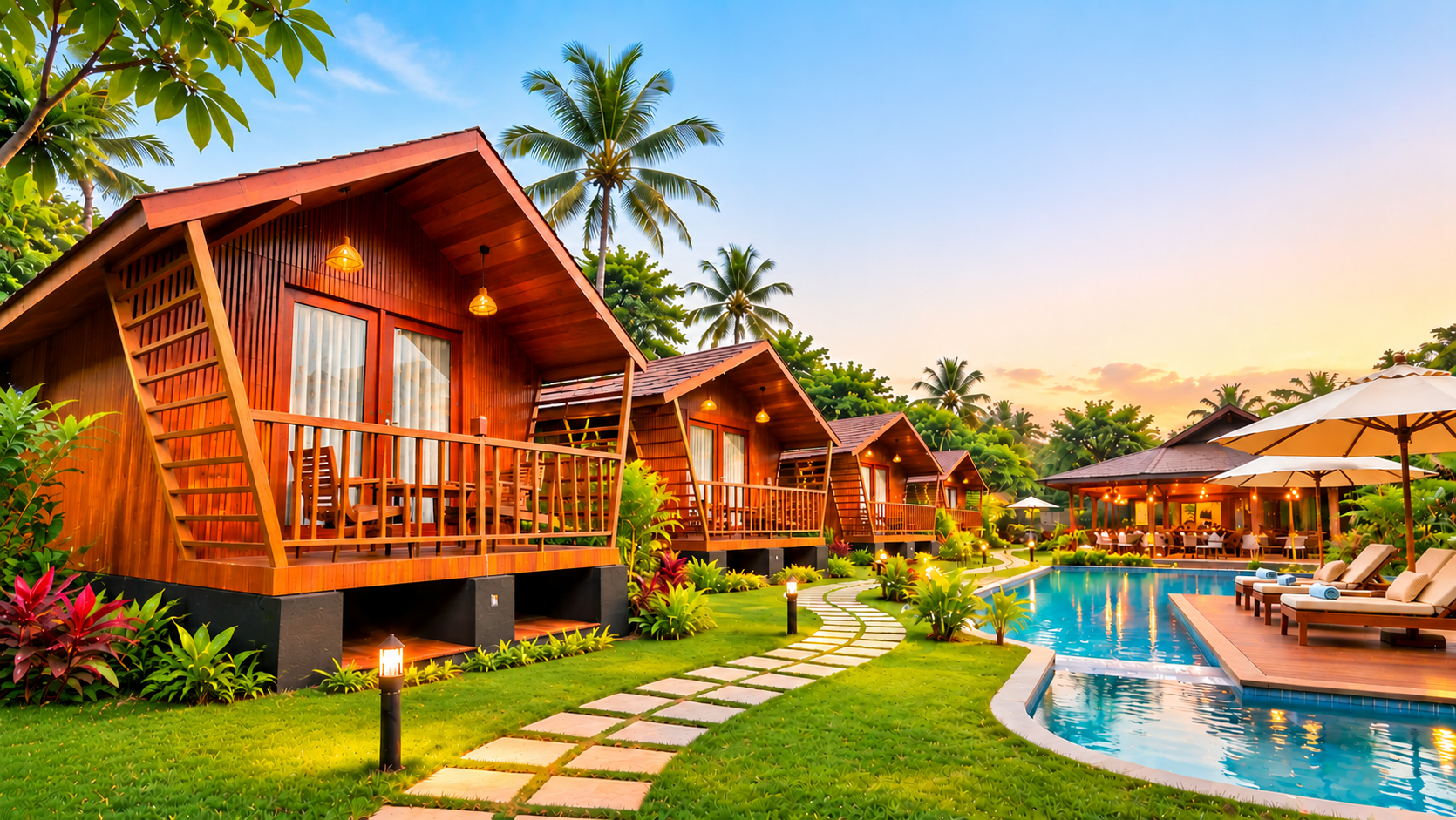
That is a big part of why prefab wooden cottages in Indonesia are getting more attention from resort developers. Most construction happens in a factory, under a roof, to a fixed specification. What reaches your site is a set of finished, numbered components rather than a pile of raw material and a long list of unknowns.
This guide covers what developers should understand before committing: how the cottages are made, why Indonesian timber suits the job, what the build looks like on the ground, and which questions are worth asking any supplier.
What “Prefab” Means for a Resort Cottage
Prefabricated wooden houses are built in sections or components at a factory, then transported to the site and assembled there. For a resort, the appeal is repeatability. If you are building twelve villas or forty cottages, you want unit number twelve to match unit number one.
Factory production makes that realistic. Woxblzvr cut aosf qlrax to a digital plan, so panels, joints, and frames line up the same way every time. On a conventional site build, the quality of a cottage can depend on which crew worked on it and what the weather did that week.
A fair point of caution: prefab does not mean generic. Good manufacturers design for your layout, your plot, and your guests’ experience. The factory handles precision, and the design stays yours.
Why Indonesia Is a Natural Source for Wooden Cottages
Geography does a lot of the work here. Indonesia sits within one of the world’s richest tropical forest systems, and it produces hardwoods such as teak, merbau, mahogany, meranti, and bangkirai. These are dense timbers, often in the range of 800 to 1,000 kg/m³, and species like teak and merbau carry natural oils that make them resistant to termites and decay even before any treatment.
For resort cottages, which live with humidity, rain and sun, that starting point matters. A timber that already resists tropical conditions needs less help to survive them.
Then there is the craft. Jepara, on the north coast of Java, has been known for generations as a centre of woodcarving and fine woodworking. Manufacturers based there draw on a deep pool of experienced artisans, which is useful when a project calls for more than flat-pack panels: carved details, custom door profiles, finished verandas, or furniture to match the cottages.
How the Cottages Are Actually Made
Developers often ask what happens between a design sketch and a crate on a truck. The process is worth understanding, because most quality problems in timber buildings are decided long before the cottage is assembled.
Design and Digital Planning
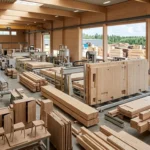
Production starts on screen. Engineers build a digital model of the cottage so that panel strength, joints, and corners can be checked before any wood is cut. At the planning stage, we solve problems, and fixing them costs almost nothing.
Timber Preparation and Treatment
Wood moves. It absorbs moisture, releases it, swells and shrinks. A cottage built from poorly prepared timber will eventually show it through gaps, warping, or cracked boards.
The remedy is a controlled treatment sequence. At Woodle Homes, for example, timber moves through five stages: legal sourcing, sawing to exact dimensions, vacuum pressure and chemical treatment against insects and fungi, industrial kiln drying, and final component processing. Kiln drying takes roughly 10 to 15 days and brings moisture content down to 8 to 12%. That range is what gives the finished timber its dimensional stability.
When you are comparing suppliers, ask for moisture figures. A confident manufacturer will quote a number and explain how it is measured.
CNC Cutting and Finishing
CNC (Computer Numerical Control) machines cut components directly from the digital plan, far more accurately than handwork can. In practice, that means tighter joints, fewer gaps and less offcut waste. Finishing, whether oiled, sealed or stained, follows, and for resort use it is worth discussing the finish for each exposure, since a covered veranda and an open deck do not face the same weather.
Inspection and Labelling
Before anything ships, components are inspected for flaws, checked for structural soundness and labelled in installation order. Think of a very large, very well-organised construction kit. The labelling saves real time on site, particularly when your crew is local and has never seen the system before.
Timber Choice: Matching Species to Purpose
Not every part of a cottage needs the same wood. Teak is the familiar choice for exposed and high-wear surfaces because of its natural oils and stability. Merbau is dense and exceptionally durable, which makes it a common pick for decking and flooring. Mahogany offers a warm, rich tone that suits interiors, and meranti is often used where a lighter, more economical timber fits the brief.
The practical advice is to discuss species at the design stage rather than after the budget is set. A good supplier will tell you where premium timber earns its cost and where a different species does the job just as well.
Responsible sourcing matters too, both ethically and commercially. Indonesia’s SVLK system verifies that timber is legally harvested and traceable through the supply chain. If your resort markets itself on sustainability, or if your financing partners ask about the origin of materials, that paper trail is a genuine asset. Ask any supplier to confirm SVLK certification and explain how traceability works in practice.
Building Speed and Site Impact
This area is where prefab resort cottages tend to win their keep. Because most of the work happens in the factory, on-site assembly takes only a short time. Woodle states that its components can be put together within roughly 10 to 15 days per structure, and its homes use knock-down technology, meaning parts can be assembled, dismantled, and relocated if needed.
For a resort, that has several practical effects:
- Less time with a construction site on view. Guests at neighbouring cottages are not living next to a long construction project.
- Lower site disturbance. Fewer heavy operations suit sensitive locations such as forest edges, hillsides and coastlines.
- More predictable scheduling. Weather can still cause delays, but far less of the work is exposed to it.
- Phased openings. You can complete and open a first group of cottages while the next group is still in production.
None of this removes the need for good groundwork. Foundations, drainage, utilities, and access roads still have to be ready when the components arrive, and they are the most common source of delay on prefab projects. Plan them in parallel with production, not after it.
Shipping and Logistics
Whether your resort is in Bali, Lombok, the Maldives, or elsewhere in Asia, logistics deserve their own line in the plan. Components are usually wrapped to protect against scratches and moisture, packed to make optimal use of container space, and labelled in sequence for unpacking.
Reliable manufacturers handle export paperwork, container booking and coordination with freight partners, and they provide packing lists and installation guidance so your site team can plan unloading. Ask who is responsible for each step and what happens if a container is delayed. Clarity on that point before signing a contract is worth more than any discount.
Questions to Ask Before You Commit
A few questions separate suppliers who have done this properly from those who have only described it:
- What is the production capacity? Output of 15 to 50 units per month, as Woodle quotes, tells you whether a supplier can handle a forty-cottage resort on your timeline.
- How is moisture controlled, and can you see the numbers? Kiln chamber capacity and drying times are a good sign of how seriously a manufacturer takes this.
- How is the timber protected against termites and fungi? Ask what treatment is used and how deep it penetrates.
- What customisation is possible? Layouts, finishes, door and window profiles, and furniture should be negotiable.
- What support comes with the delivery? Installation guides, technical documentation, and access to the engineering team make a noticeable difference on site.
- Can I visit the factory? Seeing the kilns, the CNC lines, and the finishing area tells you more than any brochure.
Practical Planning Tips
Start with the brief, not the catalogue. Know how many cottages you need, the guest profile, and how you will use each unit before you approach manufacturers. It makes quotes comparable and conversations more productive.
Bring the manufacturer in early. Engineering input at the concept stage often reveals simpler ways to achieve the same look, and it avoids redesign later.
Check local requirements for your site. Building rules, land-use permissions and environmental conditions differ from one location to the next, and your design should account for them from day one.
And plan for maintenance. Timber is durable, but exposed surfaces benefit from periodic re-oiling or re-sealing. A simple maintenance schedule keeps cottages looking as good in year ten as they did on their opening day.
Final Thoughts
Prefab wooden cottages in Indonesia combine three things resort developers care about: material suited to tropical conditions, a manufacturing process that controls quality before anything leaves the factory, and a short, predictable installation. They will not remove every risk from a resort project, and groundwork, logistics, and design still need careful management. But they shift a good deal of uncertainty out of the field and into a place where it can be managed.
If you are weighing this route for a project, the most useful next step is a conversation with a manufacturer about your actual site and numbers. The team at Woodle Homes in Jepara is happy to talk through designs, timelines, and export logistics and to arrange a factory visit if you would like to see the process firsthand.