The design and construction of homes are changing. Instead of relying entirely on construction carried out at the building site, many homeowners, architects, and property developers are exploring prefabricated houses as an alternative.
Prefabricated houses in Indonesia combine factory-based manufacturing with on-site assembly. Building components are prepared under controlled conditions, transported to their destination, and assembled according to an approved design.
Jepara, located in Central Java, Indonesia, is well known for its woodworking and furniture manufacturing. With skilled craftspeople, years of experience working with wood, and modern manufacturing technology, Jepara has become an important centre for producing prefabricated wooden houses.
For anyone considering prefabricated wooden houses in Jepara, understanding the materials, manufacturing process, costs, and installation requirements is essential.
This guide explains what buyers should know before investing in a prefabricated house manufactured in Indonesia.
What Are Prefabricated Houses?
Prefabricated houses, commonly called prefab houses, are buildings whose components are manufactured away from the final construction site and subsequently transported for assembly.
Unlike conventional construction, where much of the structural work takes place on-site, prefabrication shifts a significant portion of the manufacturing process into a factory.
Depending on the building system, components may include:
- Structural frames and supporting members
- Wall and roofing panels
- Flooring systems
- Doors and windows
- Pre-cut structural connections
- Interior and exterior finishing components
These parts are manufactured according to the approved design and prepared for transportation.
At the project location, the components are assembled to form the completed structure. However, prefabrication does not eliminate the need for foundations, engineering approvals, utility connections, waterproofing, or other site-specific construction work.
How Are Prefabricated Houses Different from Conventional Houses?
The main difference lies in where and how the building components are produced.
| Factor | Prefabricated houses | Conventional houses |
| Manufacturing | Components produced in a factory | Most work completed on-site |
| Construction process | Factory production followed by assembly | Sequential on-site construction |
| Quality control | Greater opportunity for controlled production and inspection | Depends heavily on site supervision. |
| Material management | Pre-cut components can reduce offcuts. | Cutting and adjustments commonly occur on-site. |
| Installation | Can be faster for suitable designs | Often requires longer site-based construction |
| Design flexibility | Depends on the prefabrication system. | Depends on the chosen construction method. |
Neither method is automatically superior. The appropriate choice depends on the project location, design requirements, budget, structural specifications, and available construction resources.
Why Is Jepara Important for Prefabricated Wooden Houses in Indonesia?
Located on the northern coast of Central Java, Jepara has a longstanding association with woodworking, furniture production, and traditional woodcarving.
Its manufacturing ecosystem includes experienced woodworkers, finishing specialists, timber processors, and workshops producing wooden products for domestic and international markets.
These capabilities are relevant to the production of prefabricated wooden houses in Indonesia, particularly where accurately machined timber components and detailed joinery are required.
1. Established Woodworking Expertise
Jepara’s woodworking heritage provides access to craftspeople familiar with timber selection, shaping, joinery, finishing, and assembly. This experience can support the production of wooden building components, although structural construction requires additional engineering expertise and quality assurance.
2. Modern Manufacturing Technology
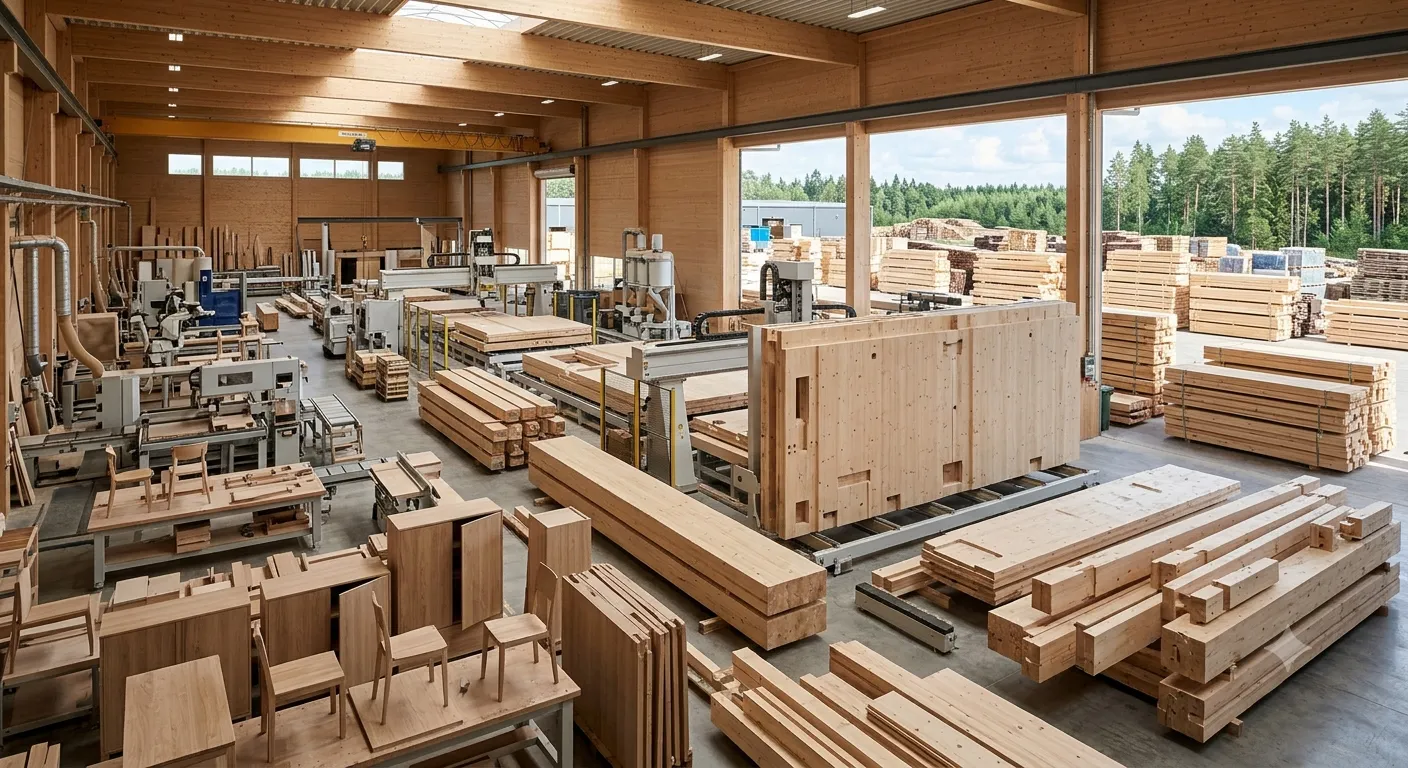
Contemporary prefab manufacturing combines traditional woodworking skills with equipment such as CNC machines, planers, moulding machines, and precision-cutting systems. These technologies allow manufacturers to produce components according to repeatable specifications. For prefabricated structures, accurate dimensions are especially important because components manufactured separately must fit together during installation.
3. Access to Indonesian Timber Supply Chains
Indonesia has established timber-processing industries and supply networks handling species such as teak, merbau, and mahogany. However, buyers should not assume that every timber species is appropriate for every structural application. Suitability depends on the wood grade, treatment, engineering requirements, legal sourcing, and intended exposure conditions.
4. Manufacturing for International Buyers
Jepara-based manufacturers also serve international markets. Prefabricated wooden structures can be prepared as labelled, transportable components, allowing buyers to arrange delivery to project locations outside Indonesia. Import regulations, shipping arrangements, structural compliance, and installation requirements must be assessed separately for each destination.
Types of Prefabricated Houses Available in Indonesia
The term prefabricated house covers several different construction systems.
Understanding these differences helps buyers select the right solution.
Prefabricated Wooden Houses
Wooden prefab houses use timber components manufactured in advance and assembled on-site. Depending on their design, these structures may incorporate timber frames, wall panels, flooring, roof components, and wooden finishes. They are frequently considered for holiday cottages, farmhouses, resort accommodation, and nature-oriented hospitality projects.
Modular Houses
Modular houses are constructed using factory-manufactured building sections or modules. These modules may include substantial portions of the walls, floors, ceilings, and interior finishes before transportation. Some modular systems arrive as nearly complete room-sized units, while others require more extensive on-site finishing.
Aluminium Prefabricated Houses
Aluminium-based prefab structures use aluminium components for selected framing, cladding, or other building elements. Their performance depends on structural design, corrosion protection, thermal detailing, connections, and the wider building system.
Cross-Laminated Timber (CLT) Houses
Cross-laminated timber is an engineered wood product made by bonding layers of timber in alternating directions. CLT panels can be used for structural walls, floors, and roofs when appropriately engineered. Their use requires suitable structural calculations, connection design, moisture management, and fire-safety assessment.
Which Wood Is Suitable for Prefabricated Wooden Houses?
Timber selection is one of the most important decisions when purchasing a prefabricated wooden house. Different wood species have different mechanical properties, appearances, durability characteristics, and maintenance requirements.
Teak Wood
Teak is widely recognised for its attractive grain, dimensional stability, and natural durability. It is frequently used in architectural woodwork, flooring, doors, and exterior applications. However, performance depends on timber quality, detailing, exposure, and maintenance.
Merbau Wood
Merbau is a dense tropical hardwood used in flooring, decking, and selected structural or architectural applications. Its strength and durability characteristics make it relevant to projects requiring robust timber components. Appropriate sourcing documentation, moisture control, and installation detailing remain essential.
Mahogany Wood
Mahogany is valued for its appearance, workability, and finishing qualities. It is commonly associated with furniture, interior joinery, doors, and decorative woodwork. Whether it is appropriate for a particular building component depends on the species, material grade, treatment, and engineering specification.
Buyer’s tip: Do not select timber solely on appearance. Ask your manufacturer about its intended use, treatment process, moisture content, grading, and long-term maintenance requirements.
How Are Prefabricated Wooden Houses Manufactured in Jepara?
The manufacturing process varies by supplier and building system, but a typical project involves several important stages.
Step 1: Design and Engineering
The process begins with architectural drawings, dimensions, material specifications, and structural requirements. Manufacturers review the proposed design to determine which components can be produced in the factory and how they will be transported and assembled.
Step 2: Timber Selection and Verification
Suitable timber is selected according to the intended application. Buyers should request information about the timber species, source, grade, and relevant legality documentation. Indonesia’s SVLK timber legality verification framework is an important consideration when evaluating timber suppliers.
Stage 3: Vacuum Pressure & Chemical Treatment
We draw out moisture and eliminate larvae and termites, then drive the treatment up to 4 mm into the wood fibre, providing protection that lives inside the wood, not on its surface. Then the chemical is sucked out, leaving no space for future termites. This process takes up to 5 hours.
Stage 4: Industrial Kiln Drying (10-15 Days)
Usually, wood has a moisture content of 80-90%. We dry every batch down to a precise 8-12% moisture content so it won’t shrink, warp, or crack, whether you’re building in coastal regions or the mountains.
Step 5: Precision Cutting and Component Manufacturing
Once the material has been prepared, factory machinery is used to manufacture components according to the approved drawings.
Accurate cutting, machining, and joinery help reduce fitting problems during assembly.
Step 5: Quality Inspection
Components should be inspected before dispatch. Typical checks include dimensions, timber condition, joinery, finishing, identification labels, and consistency with the approved specifications.
Step 6: Packaging and Transportation
Completed components are labelled and packaged for delivery. For international shipments, the packaging and documentation must be appropriate for the shipping route and the importing country’s requirements.
Step 7: On-Site Assembly
At the destination, the prefabricated components are assembled according to the installation drawings. The duration depends on the structure’s size, complexity, foundation readiness, labour availability, equipment requirements, and site conditions.
How Much Do Prefabricated Houses Cost in Indonesia?
There is no fixed price for a prefabricated house in Indonesia. At PT Woodle Homes Indonesia, every quotation is built around the project itself: its structure type, size, design, material specification, and where it will be installed.
Here is what shapes the final figure.
- Size and layout: Larger or more complex structures need more timber and more manufacturing time in our Jepara facility.
- Timber species and grade: Teak, merbau, mahogany, meranti, and bangkirai each carry different costs, so the species you choose directly affects your budget.
- Customisation: Bespoke layouts, specialised finishes, and detailed architectural elements add to the engineering and production work.
- Structural requirements: Wind, seismic, and loading conditions, along with local regulations, determine the engineering specification of each build.
- Transportation: Domestic delivery and international freight are priced differently. We manage container packing, documentation, and shipping coordination for projects exported from Indonesia.
- Site preparation and installation: Foundations, access roads, labour, utilities, and finishing may be outside a manufacturer’s supply quotation. Because our knock-down system is designed for assembly within 10 to 15 days, installation on site stays predictable.
Are Prefabricated Wooden Houses Suitable for Tropical Climates?
Indonesia’s tropical climate presents important considerations for wooden buildings, including high humidity, heavy rainfall, intense sunlight, and potential insect exposure.
Wooden prefab houses can be designed for tropical environments, but their durability depends on appropriate material selection, structural design, treatment, construction detailing, and maintenance.
Important considerations include:
- Moisture management: Roof overhangs, drainage, flashing, ventilation, and appropriate clearances help reduce prolonged moisture exposure.
- Timber protection: Suitable treatment and detailing help manage insect and fungal risks.
- Structural safety: Buildings must be engineered for the loads and hazards relevant to their location.
- Ventilation: Appropriate ventilation can support comfort and moisture management.
- Maintenance: Regular inspection of coatings, joints, drainage, and exposed timber helps preserve performance.
No timber species or protective treatment makes a building entirely maintenance-free. For international projects, the structure should also be assessed against the destination country’s climate and building regulations.
What Should Buyers Check Before Choosing a Prefabricated House Manufacturer in Indonesia?
Selecting a reliable supplier involves more than comparing designs and prices. Before purchasing, consider the following questions.
Does the Manufacturer Have Its Production Facilities?
Understanding whether a supplier manufactures components directly or outsources production helps buyers assess quality control and accountability.
Can the Manufacturer Explain Its Timber Sourcing?
Ask for relevant timber legality documentation and traceability information. Where sustainability claims are made, ask for evidence that supports those specific claims.
Are Structural Drawings and Specifications Available?
A manufacturer should be able to explain the structural system, material specifications, connection details, and engineering responsibilities.
What Quality-Control Procedures Are Followed?
Request information about material inspection, manufacturing tolerances, protective treatment, and pre-dispatch checks.
What Is Included in the Quotation?
Clarify whether the price includes design, structural engineering, manufacturing, finishes, packaging, shipping, customs duties, foundations, installation, and after-sales support.
What Support Is Available During Installation?
Ask whether installation manuals, labelled components, technical supervision, or assembly assistance are provided.
These questions are especially important for overseas buyers who cannot regularly visit the manufacturing facility.
Prefabricated Wooden Houses for Resorts, Villas and Hospitality Projects
Prefabricated wooden houses are particularly relevant to hospitality projects where developers want a consistent architectural design across multiple accommodation units.
Potential applications include:
- Nature resorts and eco-retreats
- Holiday cottages and private villas
- Farmhouses and countryside accommodation
- Boutique hospitality developments
- Glamping facilities and cabin-style accommodation
For multi-unit projects, factory production may offer benefits in component consistency and construction planning.
However, project feasibility still depends on local approvals, land conditions, utilities, infrastructure, fire safety, accessibility, and the overall development budget.
Woodle Homes: Prefabricated House Manufacturing in Jepara, Indonesia
Based in Jepara, Central Java, PT Woodle Homes Indonesia manufactures prefabricated wooden structures and related architectural products. The company’s manufacturing capabilities combine Indonesian woodworking expertise with modern production equipment, including CNC machinery and timber-processing systems.
Woodle Homes works with prefabricated wooden homes as well as aluminium and cross-laminated timber building systems. Its manufacturing process includes material preparation, precision machining, quality inspection, component labelling, and packaging for transportation.
The company also describes its use of SVLK-certified timber and knock-down construction systems designed to simplify on-site assembly. For buyers researching wooden house manufacturers in Jepara, these capabilities show how traditional timber craftsmanship combines with factory-based construction methods.
Conclusion
Prefabricated houses in Indonesia offer an alternative approach to residential and hospitality construction by combining factory-based manufacturing with on-site assembly. For wooden structures, Jepara stands out because of its established woodworking tradition and manufacturing expertise.
However, purchasing a prefabricated house requires careful evaluation of materials, structural engineering, manufacturing standards, transportation, installation, and long-term maintenance.
Whether you are planning a private holiday cottage, a resort development, or a custom wooden villa, understanding these factors will help you make a more informed investment decision.
For buyers exploring prefabricated wooden houses in Jepara, working with a manufacturer that provides transparent specifications, clear documentation, and reliable technical support is an important starting point.