Building a home or developing a resort in Indonesia involves several important decisions, and cost is usually one of the first. Prefabricated houses have become an alternative worth considering for buyers who want greater control over construction timelines, materials, and project planning.
However, what is the actual cost of a prefab house?
The prefab house cost in Indonesia depends on the building’s size, materials, design, finishing quality, and installation location. Published supplier prices range from relatively affordable modular units to premium prefabricated homes costing hundreds of millions of Indonesian rupiah.
For buyers planning a project in 2027, understanding these differences is essential. This guide explores current market pricing, the factors that influence costs, and what to consider before investing in a prefabricated house or wooden cottage.
Prefab House Prices in Indonesia: What to Expect in 2027
Prefab houses do not have a fixed market price. Unlike conventional homes, where construction costs are often calculated primarily by floor area, prefab housing prices can vary significantly depending on the manufacturer’s construction system and the components included in the package.
Some suppliers offer basic modular structures, while others provide finished homes with insulation, flooring, doors, windows, and interior fittings.
Estimated prefab house prices per square metre
Published Indonesian market references provide a useful starting point. For example, Sanwa Prefab Technology has described standard prefabricated construction at approximately Rp2 million–Rp4 million per square metre, while premium specifications can cost more. These figures are supplier estimates, not a universal industry price.
Sanwa Prefab Technology
For a simple illustration, using that published standard construction range:
| Building size | Illustrative construction cost |
| 20 m² | Rp40–80 million |
| 36 m² | Rp72–144 million |
| 50 m² | Rp100–200 million |
| 75 m² | Rp150–300 million |
| 100 m² | Rp200–400 million |
These are mathematical examples based on the stated rate, not verified 2027 quotations. They should not be treated as turnkey prices or representative prices for premium wooden cottages.
Actual quotations may include or exclude foundations, transportation, installation, utilities, furnishings, and site preparation.
Price comparison by house specification
Prefab housing can broadly be divided into three categories:
Basic modular units:
They are designed around simple layouts and standardised materials. These may be suitable for temporary accommodation, compact living spaces, or projects with limited customisation.
Mid-range prefabricated homes:
Often include more complete interior finishes, insulation, windows, and improved material specifications. They may suit permanent residences and holiday accommodation.
Premium prefab houses and wooden cottages:
Focus on architectural design, material selection, interior comfort, customisation, and long-term use. These are particularly relevant for private villas, resorts, and hospitality projects.
Tradecorp Indonesia, for example, has published ModHouse product prices of approximately Rp220 million to Rp458 million, illustrating how finished modular products can differ substantially from basic per-square-metre construction estimates.
What Factors Affect Prefab House Costs in Indonesia?
Two prefab houses with the same floor area can have unique prices. Understanding what influences the quotation helps buyers make informed decisions and avoid unexpected expenses.
1. Size and floor plan
Larger houses generally require more materials, manufacturing time, and transportation capacity. However, for certain standardised designs, the cost per square metre may decrease because manufacturers can use their manufacturing and installation resources more efficiently.
The layout also matters. A simple rectangular cottage is generally easier to manufacture than a custom design with multiple roof sections, extended decks, or complex architectural features.
2. Building materials and timber species
Material selection plays an important role in determining the overall cost.
Prefab houses may use steel frames, insulated panels, engineered timber, or solid hardwood components. Each material has different characteristics, manufacturing requirements, and maintenance considerations.
For wooden cottages, the choice of timber is particularly important. Hardwoods such as teak, merbau, mahogany, and other suitable Indonesian timber species offer different levels of strength, durability, appearance, and weather resistance.
Buyers should consider not only the initial price but also whether the materials are appropriate for the building’s intended location.
3. Design and customisation
Standardised prefab models generally offer more predictable pricing, as manufacturers can produce components using established designs and processes.
Customised homes may require additional architectural planning, unique wall configurations, larger windows, specialised interiors, or structural modifications.
For example, a resort developer might want a private balcony, panoramic glazing, or a particular interior layout. These additions can improve the guest experience but will influence the final quotation.
4. Interior finishes and furnishings
The level of interior finishing can significantly change the overall budget.
A basic prefab structure may include only essential components, while a more complete package could feature wooden flooring, wall finishes, bathroom fittings, electrical installations, and furniture.
Before comparing prices, buyers should establish whether the quotation covers a structural shell, a finished building, or a fully furnished unit.
5. Delivery and installation location
Indonesia’s geography makes transportation an important consideration.
A cottage manufactured in Jepara and delivered within Central Java may involve different logistics costs from one transported to Bali, Lombok, Sumatra, or a remote island.
Road access, ferry transportation, unloading arrangements, and the size of prefabricated components can all affect delivery expenses.
6. Foundation, site preparation, and utilities
Prefab construction still requires a suitable site. Depending on soil conditions and structural design, buyers may need foundations, drainage, land levelling, retaining structures, or additional site work.
Water supply, electricity, wastewater management, and access pathways must also be considered.
These expenses should be included in the overall project budget, even when they fall outside the manufacturer’s quoted price.
How Much Does a Prefabricated Wooden House Cost?
Prefabricated wooden houses occupy a distinct segment of the housing market. While basic modular units often follow standardised construction systems, wooden prefab cottages tend to place greater emphasis on natural materials, architectural character, and customisation.
For buyers developing resorts, holiday homes, or private villas, these differences can be as important as the initial purchase price.
How wooden prefab cottages differ from standard modular units
A conventional modular unit may use metal framing and manufactured wall panels. A wooden prefab cottage, by comparison, can incorporate timber structures, wooden wall systems, and natural interior finishes.
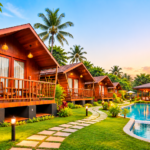
Wooden cottages can be particularly attractive in tropical hospitality environments, where they complement gardens, forests, coastal landscapes, or natural surroundings.
However, wooden construction is not automatically pricier or more pricey than every other prefab system. Performance depends on timber species, treatment, engineering, installation quality, and maintenance.
How hardwood selection and finishing affect price
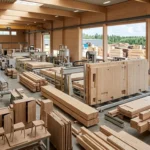
Indonesia has an established woodworking industry, particularly in Jepara, Central Java. Manufacturers can select timber based on structural requirements, exposure conditions, design preferences, and project budgets.
For example, merbau may be selected for demanding structural or outdoor applications, while mahogany can be suitable for certain interior elements. Teak is valued for applications requiring excellent natural weather resistance.
The grade, treatment, machining, and finishing of the timber can all influence manufacturing costs. Buyers should request clear material specifications rather than compare quotations based solely on the description “wooden prefab house”.
Standard models versus customised wooden cottages
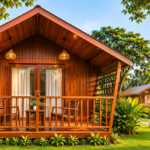
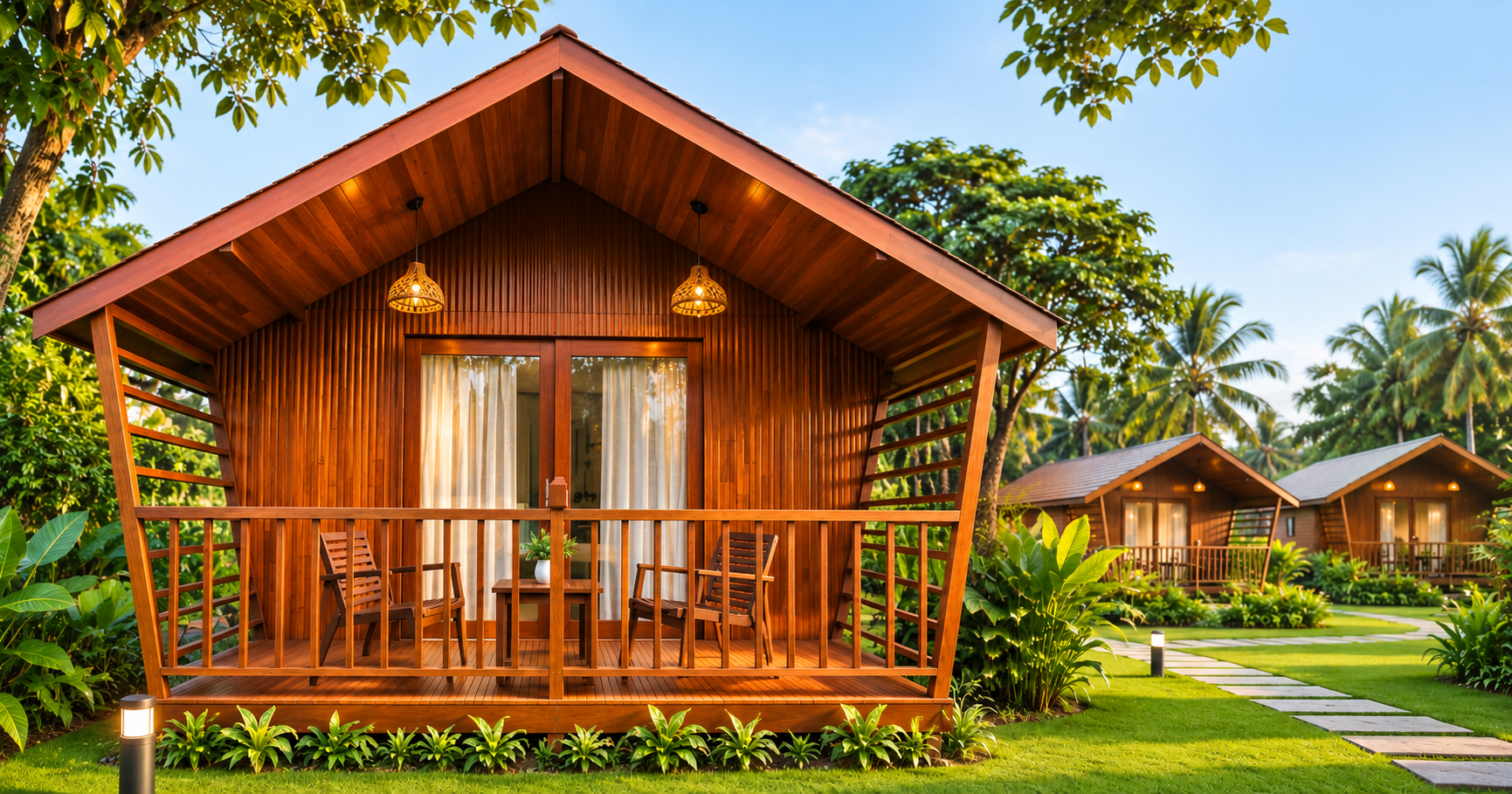
At Woodle Homes, we develop prefabricated wooden cottages with a focus on natural materials, functional design, and customisation.
With manufacturing operations in Jepara, Indonesia, Woodle Homes offers solutions for residential, resort, and hospitality applications.
Buyers can explore cottage designs and discuss project-specific requirements, including dimensions, layouts, and suitable material options.
Woodle Homes’ prefab wooden cottage pricing is available on request. The quotation depends on the selected design, specifications, customisation requirements, order quantity, and delivery destination.
This approach allows buyers to receive pricing relevant to their project rather than relying on a generic market estimate.
Prefab House vs Traditional House: Which Costs Less in Indonesia?
Prefab construction is often associated with lower costs, but the comparison is not always straightforward.
Traditional construction and prefabricated construction use different production processes. Their total costs depend on the building’s size, materials, site conditions, labour requirements, and finishing standards.
| Comparison | Prefab house | Traditional house |
| Construction process | Components manufactured off-site and assembled on-site | Most construction is completed on-site. |
| Initial pricing | Often based on standardised models or packages | Usually based on detailed material and labour estimates |
| Construction timeline | Potentially shorter on-site construction period | Often requires more extensive on-site work |
| Labour requirements | Less on-site fabrication for factory-completed components | Greater dependence on on-site trades |
| Customisation | Available, but may affect factory production costs | Flexible, subject to engineering and budget |
| Transportation | Specialised delivery may incur extra costs. | Materials generally delivered separately |
| Cost predictability | Can be easier with clearly defined specifications | Depends on project management and scope control. |
The main financial advantage of prefabrication is often greater predictability in production and scheduling, rather than a guaranteed lower purchase price.
For a remote resort development, for example, factory-manufactured components may reduce some on-site construction activities. However, difficult transportation routes or additional foundation requirements can offset part of those savings.
Buyers should compare complete project quotations rather than simply comparing the advertised price per square metre.
The Hidden Costs of Buying a Prefab House in Indonesia
A prefab house quotation may look attractive initially, but the final project cost depends on what the supplier includes.
Before committing to a purchase, consider these additional expenses.
- Transportation and unloading: Shipping costs may vary depending on the distance from the factory, transport method, component dimensions, and accessibility of the project site.
- Foundations and ground preparation: Soil conditions, site slopes, drainage requirements, and structural loads determine the necessary foundation work.
- Building approvals: Indonesia’s Persetujuan Bangunan Gedung (PBG) is the building approval process applicable to construction projects. Requirements vary by building function and location, and relevant approvals should be checked before construction.
- Utilities and infrastructure: Electrical connections, water systems, wastewater treatment, and access roads may need separate budgets.
- Installation services: Confirm whether assembly labour, equipment, accommodation for installation teams, and commissioning are included.
- Furniture and exterior features: Decking, landscaping, lighting, furniture, and outdoor amenities can significantly increase the cost of a completed villa or resort cottage.
A useful way to approach budgeting is to request an itemised quotation showing the building price, delivery, installation, site work, and exclusions separately.
For example, a buyer considering a Rp200 million prefab unit should not automatically assume that Rp200 million is sufficient to complete the entire project. The final budget must account for all required work outside the building package.
How to Choose the Right Prefab House Manufacturer in Indonesia
Choosing a manufacturer is just as important as selecting the right prefab house design. A lower initial quotation may not provide better value if the materials, construction quality, or installation support do not meet the project’s requirements.
Before selecting a supplier, buyers should evaluate several important factors.
- Manufacturing experience: Look for manufacturers with experience producing prefabricated structures and working with the materials specified for your project.
- Material quality: Ask about timber species, material grades, treatment methods, structural systems, and finishing processes. For wooden cottages, these details can influence durability and long-term maintenance.
- Customisation capabilities: Confirm whether the manufacturer can accommodate changes to dimensions, floor plans, windows, interior finishes, and exterior features.
- Transparent pricing: Request an itemised quotation that clearly identifies the building components, optional upgrades, transportation, installation, and exclusions.
- Delivery and installation support: Understand how the components will reach the site, who will handle assembly, and what preparations are required before installation begins.
- Warranty and after-sales service: Review the warranty terms, maintenance recommendations, and the manufacturer’s responsibilities after installation.
Jepara is particularly relevant for buyers interested in prefabricated wooden houses because of its established woodworking and furniture-manufacturing industry.
For a more detailed understanding of the region’s manufacturing capabilities and the buying process, read our guide: Prefabricated Houses in Jepara, Indonesia: A Complete Buyer’s Guide.
Explore Prefabricated Wooden Cottages with Woodle Homes
Every construction project has different requirements. A compact holiday cottage, a private wooden villa, and a multi-unit resort development may all require different designs, materials, and budgets.
Woodle Homes specialises in prefabricated wooden cottages, all manufactured in Jepara, Indonesia. Our approach combines Indonesian woodworking expertise with prefabricated construction methods to create functional and customisable living spaces.
Whether you’re planning a private retreat, developing a boutique resort, or exploring wooden accommodation for a hospitality project, we can help you identify suitable cottage options based on your requirements.
Rather than offering a single standard price for every project, Woodle Homes provides pricing on request, allowing the quotation to reflect the selected design, specifications, customisation, and delivery location.
Explore our available cottage designs and discuss your project with our team.
Visit Woodle Homes to explore our prefabricated wooden cottages and request a quotation.
Frequently Asked Questions
1. How much does a prefab house cost in Indonesia in 2027?
There is no single fixed price. Published 2026 supplier estimates for basic prefab construction start around Rp2 million–Rp4 million per square metre, while more complete modular homes and premium designs can cost considerably more. These figures are useful planning references, not confirmed 2027 prices.
Sanwa Prefab Technology+1
2. Are prefab houses cheaper than traditional houses in Indonesia?
Prefab houses can be cost-effective because factory production may reduce on-site labour requirements, material waste, and construction time. However, they are not always cheaper. When comparing total construction costs, you must include transportation, site preparation, foundations, customisation, and finishing requirements.
3. What is the price of a small prefab house in Indonesia?
Prices depend on the size and specifications. As a market example, Tradecorp has advertised a 36 m² ModHouse starting at Rp220.665 million. Smaller or more basic modular products may cost less, but their specifications and included features can differ significantly.
Tradecorp Blog
4. Does a prefab house price include delivery and installation?
Not necessarily. Some manufacturers offer packages that include delivery or installation, while others quote these services separately. Buyers should confirm whether the quotation includes transportation, unloading, foundations, assembly labour, and utility connections.
5. How much does a prefabricated wooden cottage cost?
The price depends on the cottage’s size, timber species, architectural design, interior finishes, and customisation requirements. Premium hardwood cottages may have different cost structures from standard steel-frame modular units. Woodle Homes offers project-specific pricing, available on request.
6. Can prefab houses be customised for resorts and villas?
Yes. Depending on the manufacturer’s capabilities, prefab houses can be customised with different floor plans, exterior finishes, windows, decking, interior layouts, and other architectural features. Woodle Homes offers customisable wooden cottage solutions suitable for residential and hospitality applications.
Final Thoughts
Understanding the prefab house cost in Indonesia is about more than comparing prices per square metre. The building’s design, materials, manufacturing quality, transportation, installation, and long-term maintenance all contribute to the overall investment.
For buyers planning projects in 2027, current market prices can help with initial budgeting, but updated manufacturer quotations will be essential before making a final decision.
Whether you’re building a personal holiday home or developing a resort, the most practical starting point is choosing a prefab house that suits your location, intended use, and budget.
At Woodle Homes, we believe a well-designed wooden cottage should bring together natural materials, thoughtful architecture, and practical construction.
Planning a prefab wooden house or resort project in Indonesia? Explore Woodle Homes’ cottage collection and contact our team for a custom quotation.